Spices Medicinal Herbs - spices of india
Spices of India - Spices Medicinal Herbs

Spices &
Medicinal herbs

Spices of India, Medicinal
HERBS
SPICES
VEGETABLES
Amaranth :: Breadfruit :: Brocolli :: Cauliflower :: Cucumber :: Drumstick :: Hijiki :: Garlic

Vegetables
Classification of Vegetables

List of Vegetables
  • Amaranth
  • Brocolli
  • Cauliflower
  • Ackee
  • Breadfruit
  • Cucumber
  • Asparagus
  • Celery
  • Garlic
  • Asparagus Pea
  • Black-eyed Pea
  • Drumstick
  • Aonori
  • Dabberlocks
  • Hijiki
  • Cultivated Mushroom
  • Boletus
  • Cantharelle
Mountains where herbs can be found


Home :: About Us :: Contact US

Vegetable : Cucumber

(Botanical Name : Cucumis Sativus

Classification

History

The cucumber is believed to be native to India, and evidence indicates that it has been cultivated in Western Asia for 3,000 years. From India, it spread to Greece, Italy, China and was then introduced into other parts of Europe, England, France and North America.

Plant Description

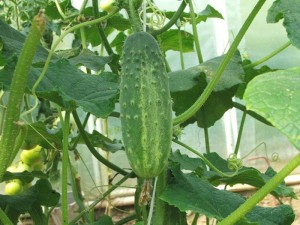
The cucumber is the edible fruit of the cucumber plant Cucumis sativus, which belongs to the gourd family Cucurbitaceae.

The cucumber plant is an annual climber which grows to a height of 15-30 cm and has large leaves that form a canopy over the fruit. The vine is grown on the ground or on trellises, often in greenhouses.

Cultivation

It requires a rich, well-drained moisture retentive soil and a warm very sunny position. The seeds are sown early to mid spring in rich soil. Germination takes place within 2 weeks.

It is in flower from July to September, and the seeds ripen from August to October. The flowers are monoecious (individual flowers are either male or female, but both sexes can be found on the same plant). The plant is self-fertile.

The plant prefers acid, neutral and basic (alkaline) soils. It cannot grow in the shade and requires moist soil.

The male flowers should be removed in order to prevent fertilization, since the fertilized fruits have a bitter taste.

The roots of cucumber plants secrete a substance that inhibits the growth of most weeds. Cucumbers make good companion plants for sweet corn, beans and sunflowers, but they dislike growing with potatoes and aromatic herbs.

A few varieties of cucumber are parthenocarpic, the blossoms creating seedless fruit without pollination. Thousands of hives of bees are annually carried to cucumber fields just before bloom for this purpose. Cucumbers may also be pollinated by flies.

Parts Used

The edible parts are fruits, seeds and leaves.

Cucumbers grown for pickling (picklers) and those grown for fresh market (slicers) are the same species. Fruit of fresh market cucumbers are longer, smooth rather than bumpy, have a more uniform green skin color and a tougher, glossier skin than fruit of picklers.

Chemical constituents

The dietary value of Cucumber is negligible, there being upwards of 96 per cent water in its composition. The oil in the cucumber contains 22.3% linoleic acid, 58.5% oleic acid, 6.8% palmitic acid and 3.7% stearic acid.

The fresh cucumber is a very good source of vitamin C, vitamin K, and potassium. It also contains vitamin A, vitamin B6, thiamin, folate, pantothenic acid, magnesium, phosphorus, potassium, copper, and manganese.

Nutritional Value of cucumber

Calories 39 % Calories from Fat 7.8
Total Fat (g) 0.4 % Calories from Carbohydrates 73.8
Saturated Fat (g) 0.1 % Calories from Protein 18.5
Monounsaturated Fat (g) 0.0 % Refuse 3.0
Polyunsaturated Fat (g) 0.2 Vitamin C (mg) 16
Cholesterol (mg) 0 Vitamin A (i.u.) 647
Carbohydrate (g) 8.3 Vitamin B6 (mg) 0.13
Dietary Fiber (g) 2.4 Vitamin B12 (mcg) 0
Protein (g) 2.1 Thiamin B1 (mg) 0.07
Sodium (mg) 6 Riboflavin B2 (mg) 0.07
Potassium (mg) 433 Folacin (mcg) 39.1
Calcium (mg) 42 Niacin (mg) 0.7
Iron (mg) 0.8 Caffeine (mg) 0.0
Zinc (mg) 0.6 Alcohol (g) 0.0
Daily Values:  
  % Daily Value (2000 Cal diet) % Daily Value (2500 Cal diet)
Total Fat (g): 0.4 1% 0%
Saturated Fat (g): 0.1 0% 0%
Cholesterol (mg): 0 0% 0%
Sodium (mg): 6 0% 0%
Carbohydrate (g): 8.3 3% 2%
Dietary Fiber (g): 2.4 10% 8%
Protein (g): 2.1 4% 3%

Culinary Uses

Medicinal Uses

Other Uses

Other species

Other Names