
Spices and Medicinal Herbs
A complete guide to vegetables, spices & herbs
Vegetables

What are vegetables?

Classification of vegetables
Leafy Vegetables
Fruit and Flower Vegetables
Root, Tuber and Bulb Vegetables
Bulbs
Tubers
Roots
Podded Vegetables
Seaweed Vegetables
Fungi Vegetables

Spices
Herbs

What are herbs?

Classification of herbs
Annual Herbs
Biennial Herbs
Perennial Herbs


Home :: About Us :: Contact US

Vegetable : Broccoli

(Botanical Name : Brassica oleracea)

Classification

History

It is native to coastal southern / western Europe and North Africa. The earliest records of cabbage being cultivated for food come from the Greeks around 600 BC. Now it is grown for food everywhere and six main vegetables have been produced from this one species.

Its natural occurrence is on limestone sea cliffs due to its tolerance to salt and lime.

Plant Description

Wild B. olearacea is a tall biennial plant, forming a stout rosette of large leaves in the first year, and stored nutrients are used to produce a flower spike 1–2 m tall bearing numerous yellow flowers in the second year.

The roots can be found up to 3 feet away from the plant. After a few months of growing some of the roots will mine vertically to a depth of 1.5-2 m.

The stem is waxy, usually unbranched and, from it arise the leaves and flower heads.

The leaves are simple, alternate and without stipules. Many times they are pinnately lobed.
Cultivation

It yields best when planted in a well drained, sunny location. An easily grown plant, it succeeds in full sun in any reasonable soil, though it prefers a well-drained fertile preferably alkaline soil. It does well in heavy clay soils.

The plant grows quickly, so keep soil moist by frequent watering, if necessary. It requires less water as heads begin to mature.

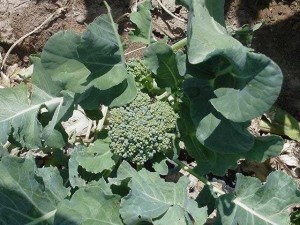
A head of broccoli is a cluster of flower buds. When the head is young its individual buds are packed very tightly. As long as the buds stay tight, let the head grow. Once the head begins to loosen and spread out, they are about to bloom and the head should be cut immediately, regardless or the size.

The soil for broccoli must be fertile, well drained and high in organic matter. The optimum pH is between 6.5 and 7.5. Lime should be applied as needed according to soil tests. It is important to keep your pH levels at optimum because above or below could increase the susceptibility of the plant to disease and insects.

Broccoli is a cool season crop. It does best when temperatures remain between 40 degrees and 70 degrees F. during the growing period. In most areas broccoli grows best if planted in late summer so it can mature during cool periods.

Broccoli is a fast growing succulent plant that requires even soil moisture. Uneven soil moistures will create adverse affects on the broccoli growth. Irrigation is necessary if natural rainfall does not suffice.

Seeds are sown in April. Sow seeds ½ inch deep. After thinning, plants should be about 10 inches apart. Successive sowings should occur at one month intervals.

Parts Used

The edible part of the broccoli plant is a tender stem and unopened flower buds.

Chemical constituents

It is rich in Vitamin A, B1, B2, and C.

It contains Dithioltiones and glucosinolates, which enhance antioxidant and detoxification effects in the body.

It is also source of Isothiocyanates, which inhibit tumor growth.

It also contains Coumarins that block cancer causing compounds.

Various phenols in cabbage prevent the formation of carcinogens and enhance detoxification enzymes.

Uses

Other Names